Manual Transfer Switch Install for Safer Generator Hookup
Most people don't think about backup power until the lights go out. Then it becomes urgent fast. The problem is, a lot of homeowners just plug a generator into an extension cord or worse - backfeed it directly into the panel. That's dangerous for you and for utility workers trying to restore power on the line.
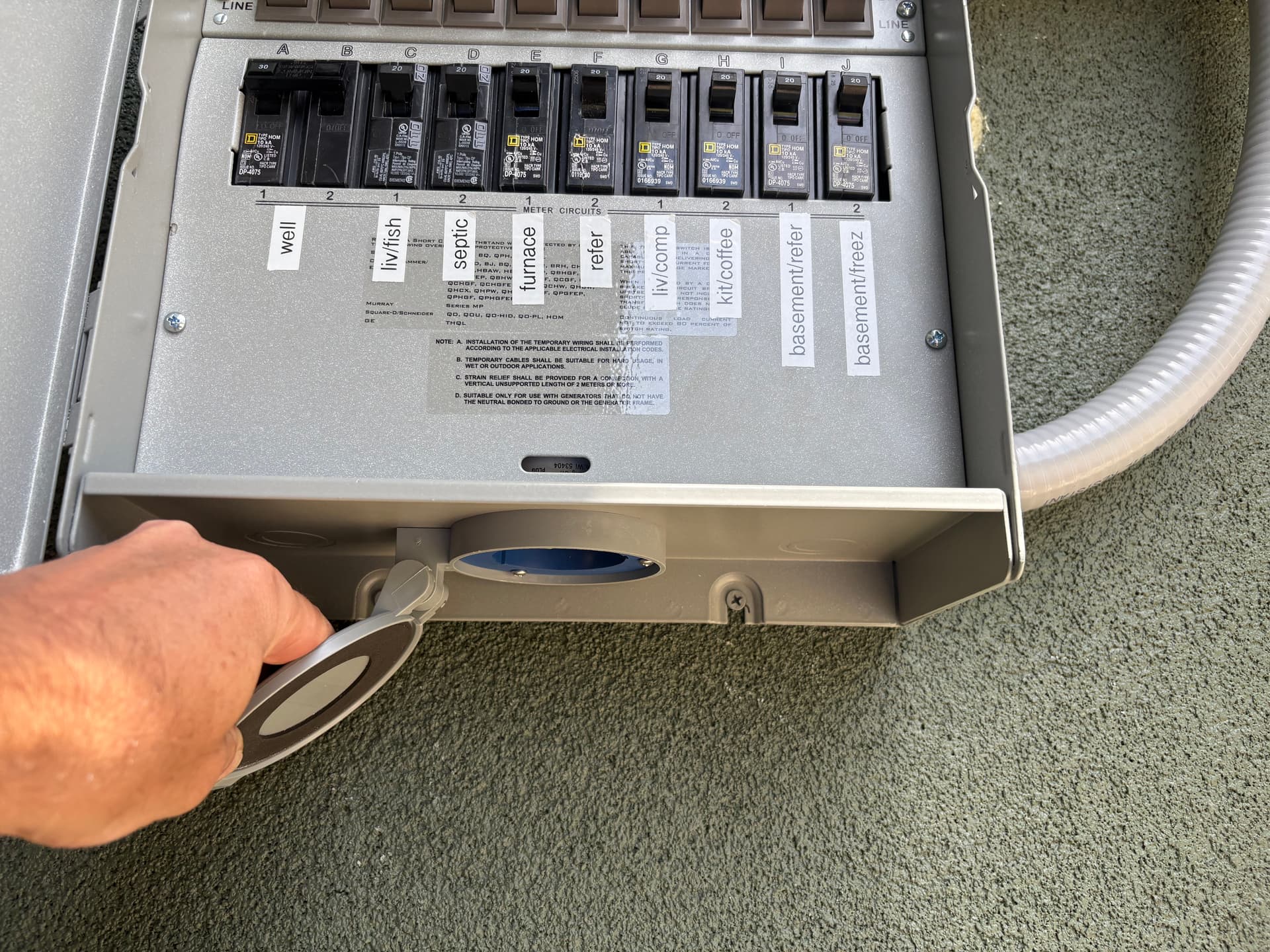
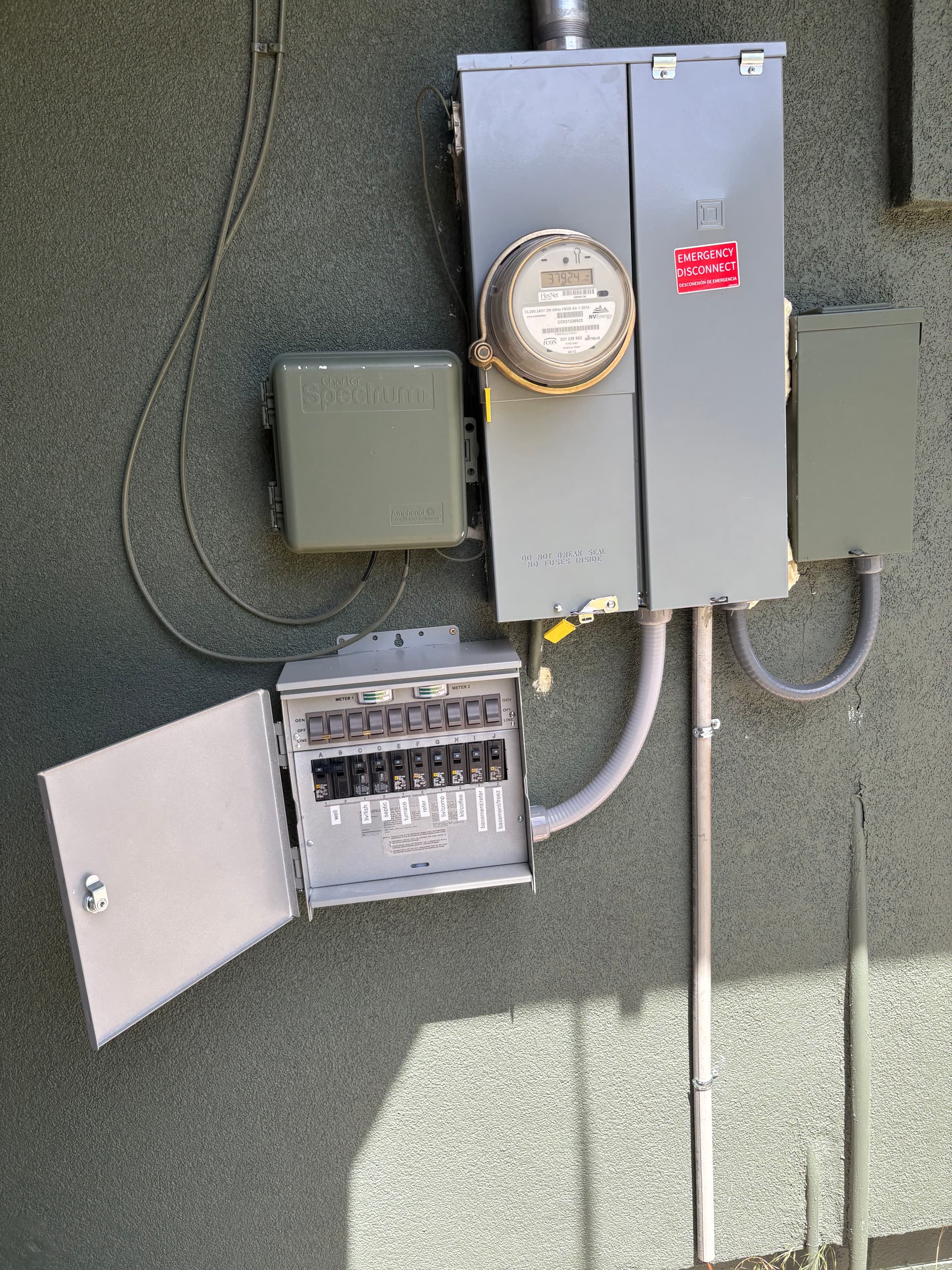
That's exactly the problem a manual transfer switch solves. We installed one here to give this homeowner a safe, clean way to connect their generator when the grid goes down. The transfer switch is wired directly into the panel and includes clearly labeled circuits - well, septic, furnace, refrigerator, living areas - so you know exactly what's getting power and in what order to prioritize it.
What we like about this setup is the simplicity. When the power goes out, you don't have to guess or fumble around. You flip the switch, connect the generator to the dedicated inlet, and you're running the circuits that matter most. No extension cords running through windows. No risk of back-feeding the utility line. Just a straightforward, code-compliant solution.
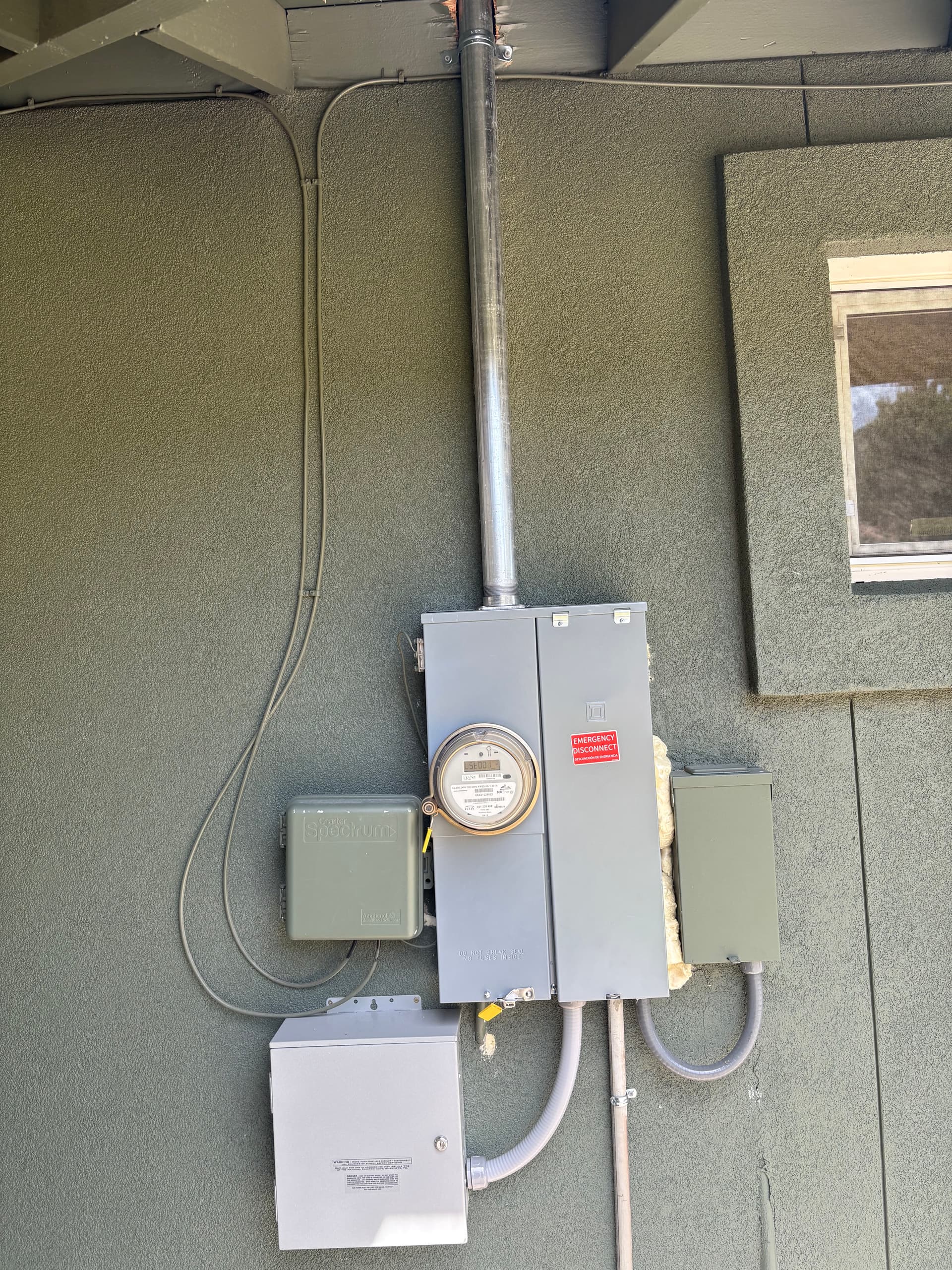
The outdoor enclosure is mounted close to the main meter and panel, keeping everything organized and accessible. It's a neat install - conduit run clean, the inlet protected with a proper cover, and the whole thing is set up in a way that makes sense for the homeowner to use on their own without calling us every time the power cuts out. That's the goal.
If you've got a generator sitting in the garage and you're still using extension cords or haven't figured out a safe connection method, this is worth looking into. A manual transfer switch is one of the more practical electrical upgrades you can add to a home - especially heading into storm season.